

RBI Begins Tightening Cycle
Oct 7, 2026
Highlights: The RBI’s first-rate hike in nearly four years marks a decisive shift in the interest-rate cycle. For fixed income investors, however, the question is no longer simply whether yields will rise, but whether current yields adequately compensate investors for the risks ahead.
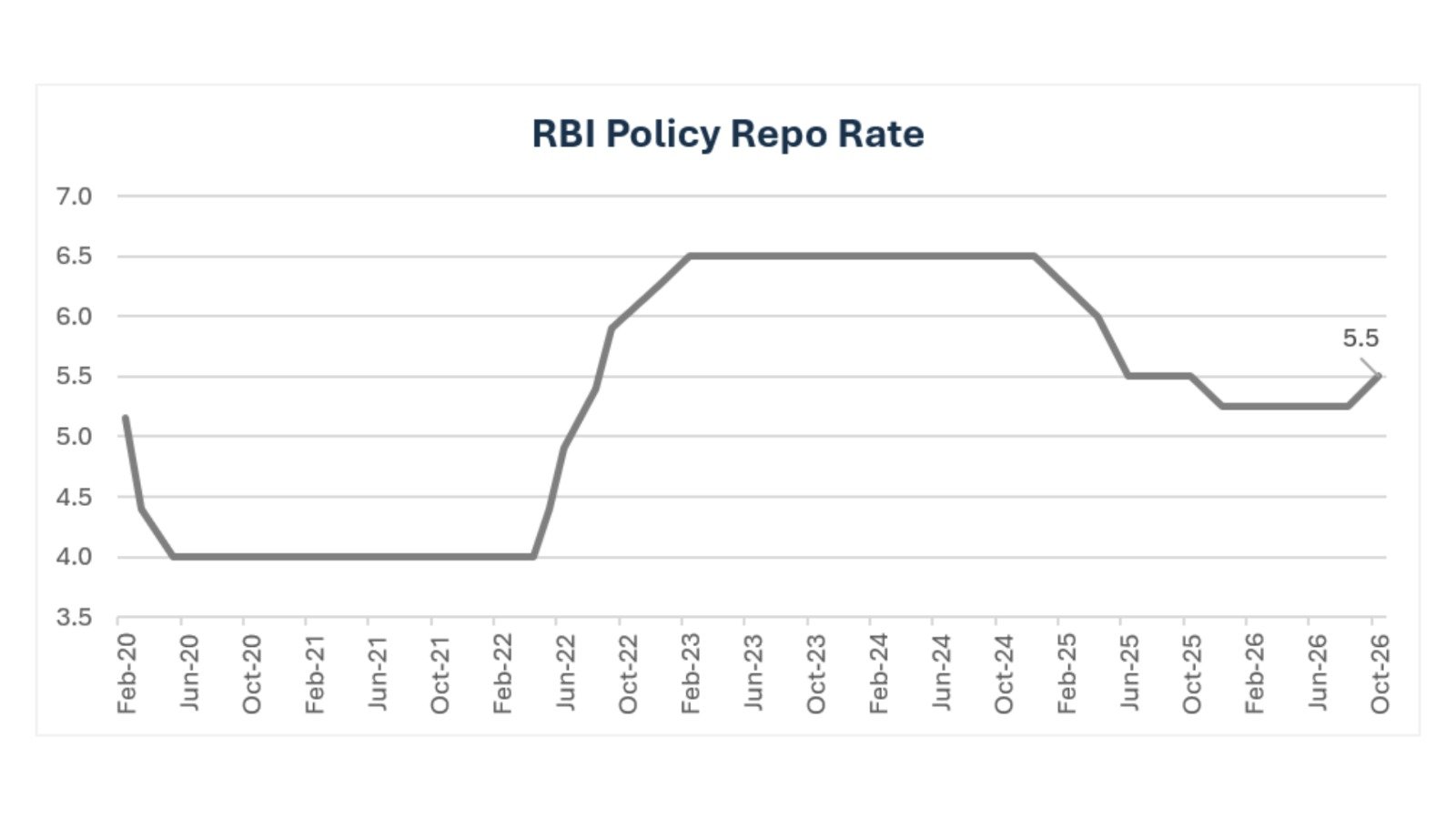
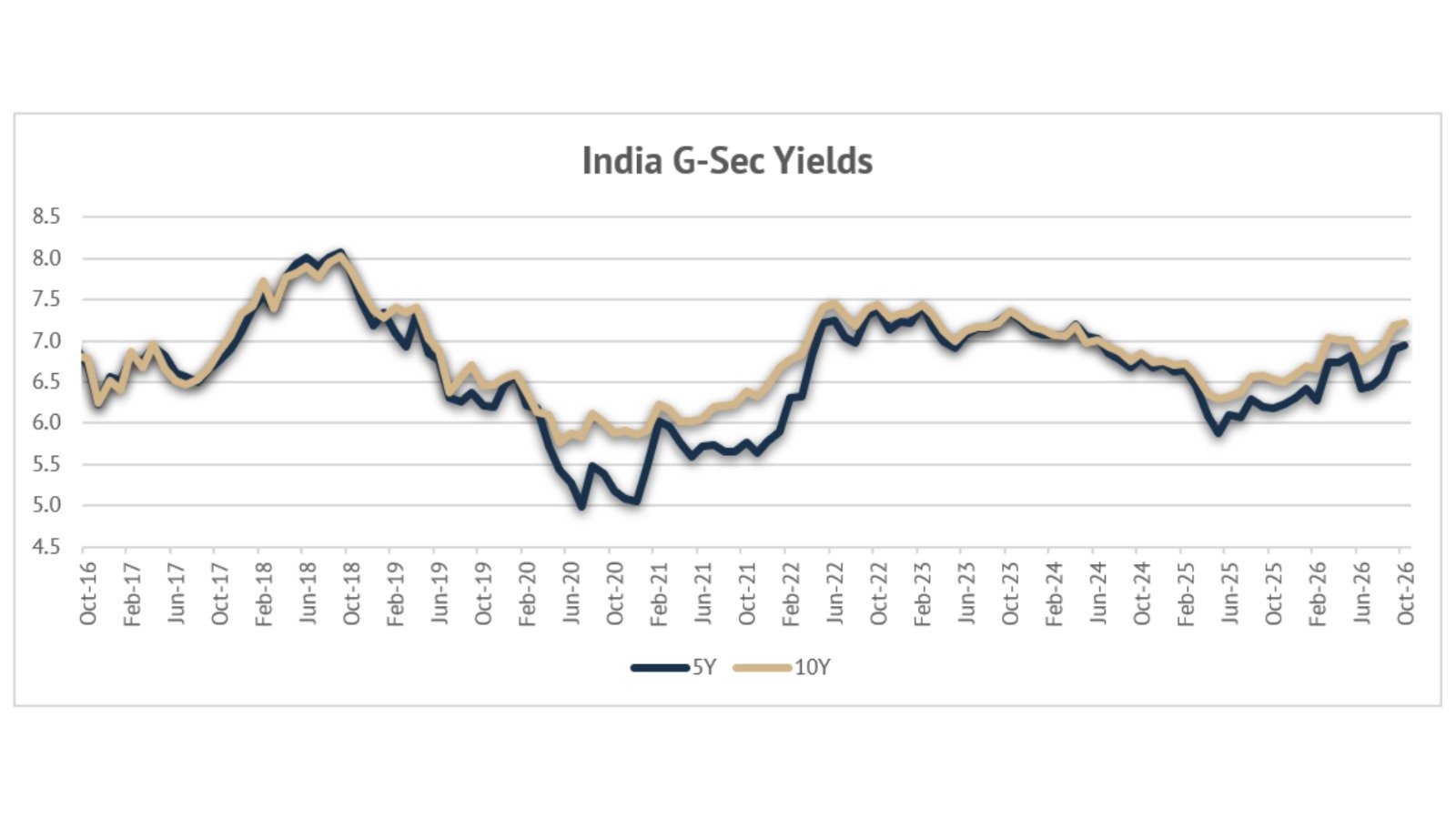
The Reserve Bank of India has kicked off a rate-hiking cycle to cool inflation which is being driven by supply shocks. The RBI Monetary Policy Committee (MPC) unanimously hiked interest rates by 25bps, taking the repo rate to 5.50% from 5.25%, which didn’t come as a surprise as it was in line with market expectations. However, the surprise element was MPC changing the stance to ‘calibrated tightening’ from ‘neutral’, for the first time after October 2018 policy. This indicates that rate-hike cycle has just begun with today’s move, rather the central bank will be careful and data dependent rather than being aggressive in tightening policy going ahead. Only four out of six MPC members supported changing the stance to ‘calibrated tightening’ and it felt like forward guidance preparing markets for further rate hikes before price pressures began to recede. The knee jerk reaction was negative on local bonds with 10Y bond yield rising to 7.27% from 7.21% level.
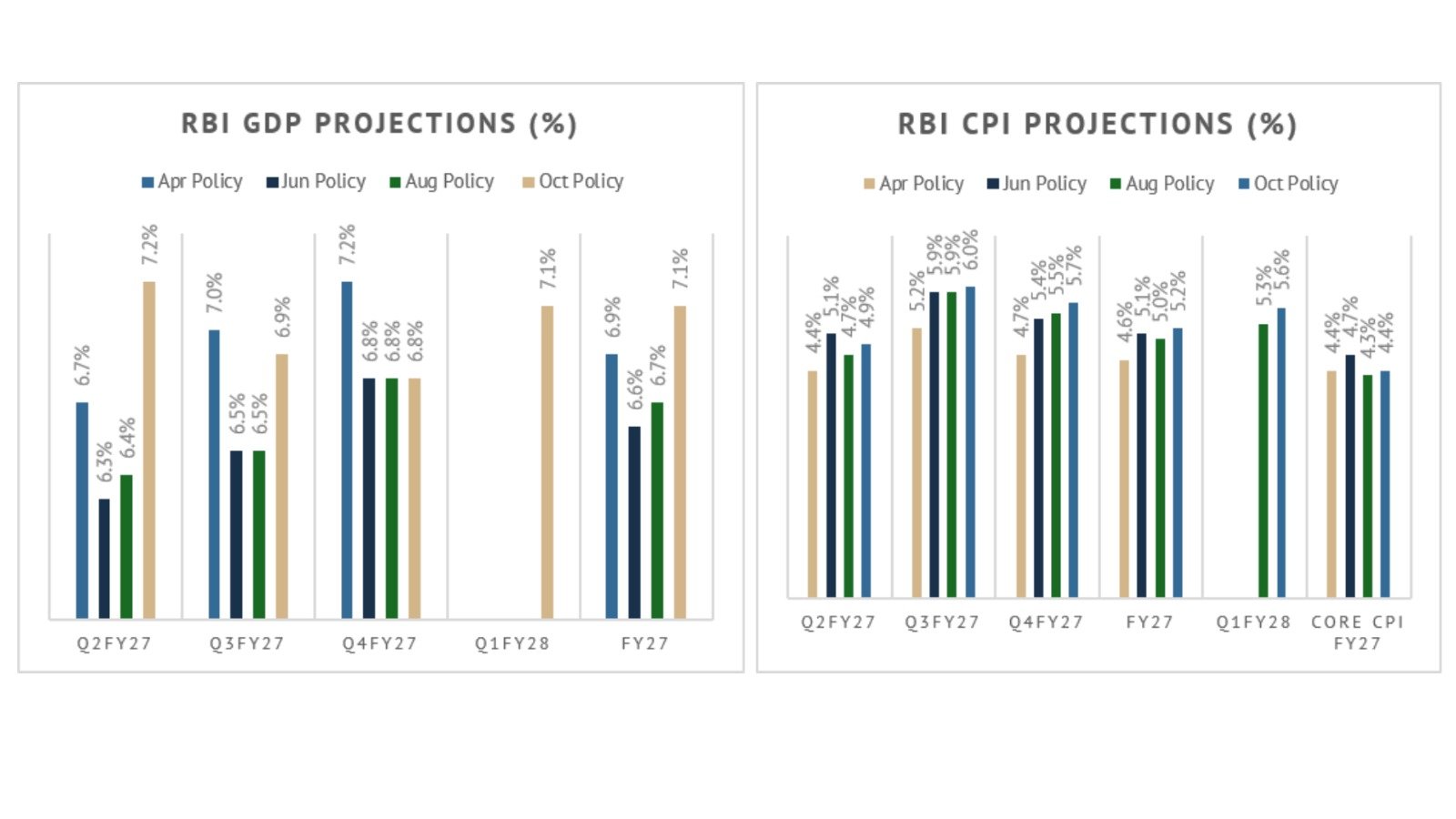
The inflation projections for FY27 have been upwardly revised to 5.20% from Aug policy projection of 5%. The renewed surge in global crude prices since the August review and a 13% monsoon rainfall deficit are set to drive inflation higher in the months ahead. With inflation expectations already rising, the RBI appears concerned the twin supply shocks could send them substantially higher. Thus, it sees early rate hikes to prevent those shocks from having broader second-round effects on inflation. With India’s CPI inflation still below the upper band of 6%, today’s move may likely see as an advantage of acting early.
Meanwhile, the Indian economy has remained resilient notwithstanding the persisting global headwinds. Growth has been driven by robust private consumption, government’s continued thrust on infrastructure spending, and strong investment activity with positive contribution of net exports. Looking ahead, global economic uncertainty and supply chain disruptions are expected to have some bearing on domestic economic activity. Taking all factors in consideration, the MPC upwardly revised the FY27 GDP forecast by 40 bps to 7.1% from 6.7%.
Overall, the policy had a cautious tone. For fixed income investors, this is a significant change in the macro backdrop. The market had largely anticipated a 25-bps hike, yet the benchmark 10-year government bond yield moved higher after the announcement. The reaction suggests that investors are concerned about the future path of hikes in the policy rates.
The bond market will be influenced not only by the repo rate but also by the RBI’s management of system liquidity. With liquidity surplus remaining elevated following foreign-currency inflows and RBI FX operations, the central bank may continue using tools such as OMO sales and other liquidity-absorption measures. This could keep money-market rates and government bond yields under pressure even if the RBI pauses after another hike.
With system liquidity currently at around Rs4.98 trillion, we expect the RBI to step up liquidity absorption through another round of OMO sales, potentially amounting to nearly Rs1 trillion, to ensure effective transmission of the tighter monetary policy stance. Seasonal currency in circulation (CIC) expansion should provide an additional drain on system liquidity. We therefore expect the calibrated tightening stance to be accompanied by further liquidity withdrawal measures, including OMO sales and continued FX intervention. The likelihood of a CRR/I-CRR hike remains low.
For investors, the shift to ‘calibrated tightening’ signals that rates may rise further, though much of this is already priced in. The key swing factors are developments in the Middle East conflict, through their impact on crude prices, and the path of US Fed policy. Against this backdrop, the 5–7 year segment offers the best balance between carry and duration risk. Longer-duration bonds should be added gradually, positioning for capital gains once inflation eases and the cycle turns. For corporate borrowers, borrowing costs are likely to keep rising as the RBI drains liquidity and further hikes stay on the table. Repo-linked and short-term borrowings such as CPs will reprice quickly, so it may be prudent to lock in medium-term or fixed-rate funding now rather than wait for further tightening.
Disclaimer: The content of this article is for informational purposes only and should not be considered financial or investment advice. Investments in financial markets are subject to market risks, and past performance is not indicative of future results. Readers are strongly advised to consult a licensed financial expert or advisor for tailored advice before making any investment decisions. The data and information presented in this article may not be accurate, comprehensive, or up-to-date. Readers should not rely solely on the content of this article for any current or future financial reference.